Blog
What Should I Do Before a Boiler Repair Engineer Arrives?

What should I do before a boiler repair engineer arrives?
When a boiler stops working, the most useful preparation is not taking the casing apart or trying to reset it repeatedly. It is gathering clear information, carrying out a few safe external checks and knowing when to stop. That gives us a better starting point when we attend your property in Rainham, Chatham, Gillingham, Rochester or Strood.
If you are looking for the short overview of our boiler repair service, you can read that separately. This guide focuses on what you can do before the visit without creating a safety risk or changing the fault we need to diagnose.
Start by identifying exactly what has stopped working
A boiler fault does not always affect every part of the heating system. Before calling, check what you can safely observe:
- Are the radiators cold, or is the problem only with hot water?
- Does the boiler display a fault code, symbol or warning light?
- Is the boiler completely blank, or does it appear to be powered but not firing?
- Are the heating controls showing the correct setting?
- Did the problem begin after a change to the controls, power supply or water system?
- Are there unusual noises, smells or leaks around the boiler or nearby pipework?
Write down the exact wording of any fault code rather than relying on memory. A photograph of the display can also help, provided you do not need to remove a cover or reach into the appliance to take it.
This information does not replace diagnosis. It helps us separate a control issue from a boiler fault and reduces the chance of an important detail being missed during the initial conversation.
Check the simple controls without dismantling anything
Look at the boiler display, programmer, room thermostat and heating controls. Make sure the controls have power and are calling for heat according to the manufacturer’s instructions. If you have recently changed batteries in a thermostat or altered a timer, mention that when you contact us.
You can also check a clearly accessible, labelled electrical isolation switch near the boiler. Do not remove electrical plates, open the boiler or investigate wiring. If the switch is already on, leave it alone. Repeatedly switching the boiler on and off can erase useful information from the fault sequence and will not resolve an underlying mechanical or electrical problem.
If the manufacturer’s instructions provide a reset procedure, one reset may be appropriate when the boiler has shut itself down. Follow the instructions exactly. Do not keep resetting the appliance if it locks out again, makes an unfamiliar noise or shows a warning connected with combustion, overheating or pressure.
Look for external signs, not internal causes
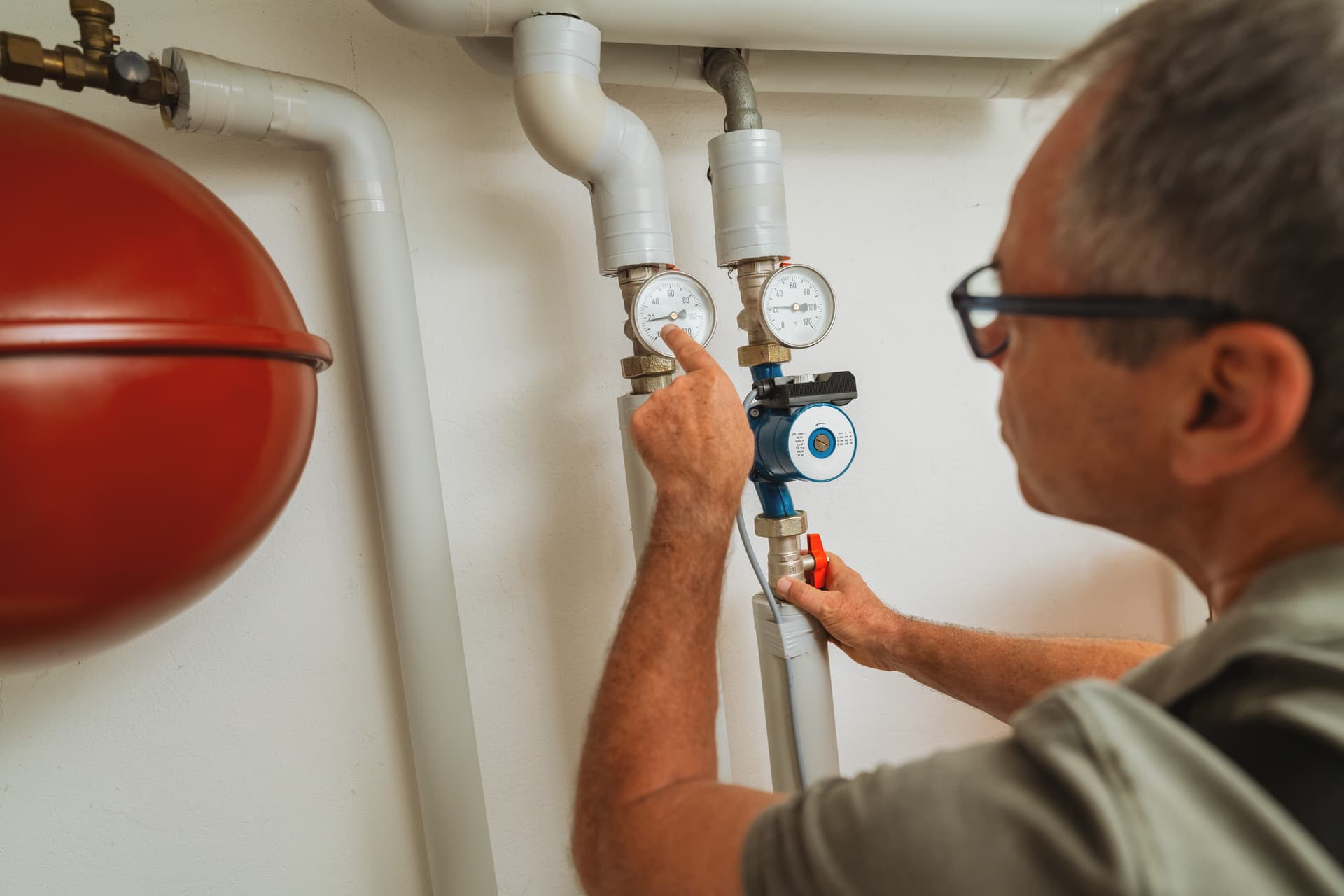
A visual check around the appliance can be helpful. Look for water on the floor, staining beneath connections, a damaged visible pipe or signs that the pressure reading has moved outside the marked operating range. Do not touch hot pipework, operate valves without knowing what they control or remove the boiler casing.
If the condensate pipe, which carries waste water away from the boiler, is accessible and appears disconnected, damaged or blocked, tell us what you have seen. Do not use boiling water, tools or chemicals to clear it. A condensate problem can be connected to the boiler shutting down, but the correct remedy depends on the installation and the condition of the pipework.
Keep the area around the boiler accessible. If the appliance is inside a cupboard, clear stored items from around it, but do not alter ventilation openings or move anything that forms part of the installation. Have any service record, fault code or manufacturer information available if you can find it easily.
Know the point where checks must stop
Do not try to find faults inside gas appliances or pressurised heating systems yourself. Do not remove the case, adjust gas controls, disconnect components, bleed a suspected gas escape or attempt to repair electrical parts. These jobs require the appropriate qualified person and proper testing equipment.
If you smell gas, treat that as a safety issue rather than an ordinary boiler breakdown. Do not use flames, operate electrical switches or continue investigating the appliance. Leave the property if necessary, ventilate only where this can be done safely and contact the appropriate gas emergency service. Tell us about the suspected gas escape when arranging any follow-up work.
If anyone develops symptoms that could indicate exposure to carbon monoxide, leave the property and seek urgent assistance. Do not rely on a boiler reset to make the situation safe.
What helps us most when we arrive
The best preparation is a clear account of what happened, what the boiler is displaying and what you have already checked. Tell us whether the fault affects heating, hot water or both, and mention any leaks, noises, smells or recent changes to the system.
We carry out boiler repair for homes and heating systems across Rainham and the wider Medway area. We are Gas Safe Registered. For safe advice or to arrange a repair, contact us on 07875 415135.
Other Articles